Which Is Cheaper: Townhouse or Condo?

Both townhouses and condos are units that share walls with their neighbors, but attached homes mean attached responsibilities. You get your own front door, your own land, and in most cases, full ownership of everything inside and out. A townhouse is a multi-story home that shares one or two walls with the neighbors but otherwise stands on its own.
Condo complexes often look like apartment buildings. They’re more about what's inside the walls. You own your unit, but the building itself, and all the common spaces like the lobby, the gym, and the pool, are owned collectively along with your neighbors. Which one you choose affects your costs, your responsibilities, and the way you live day to day.
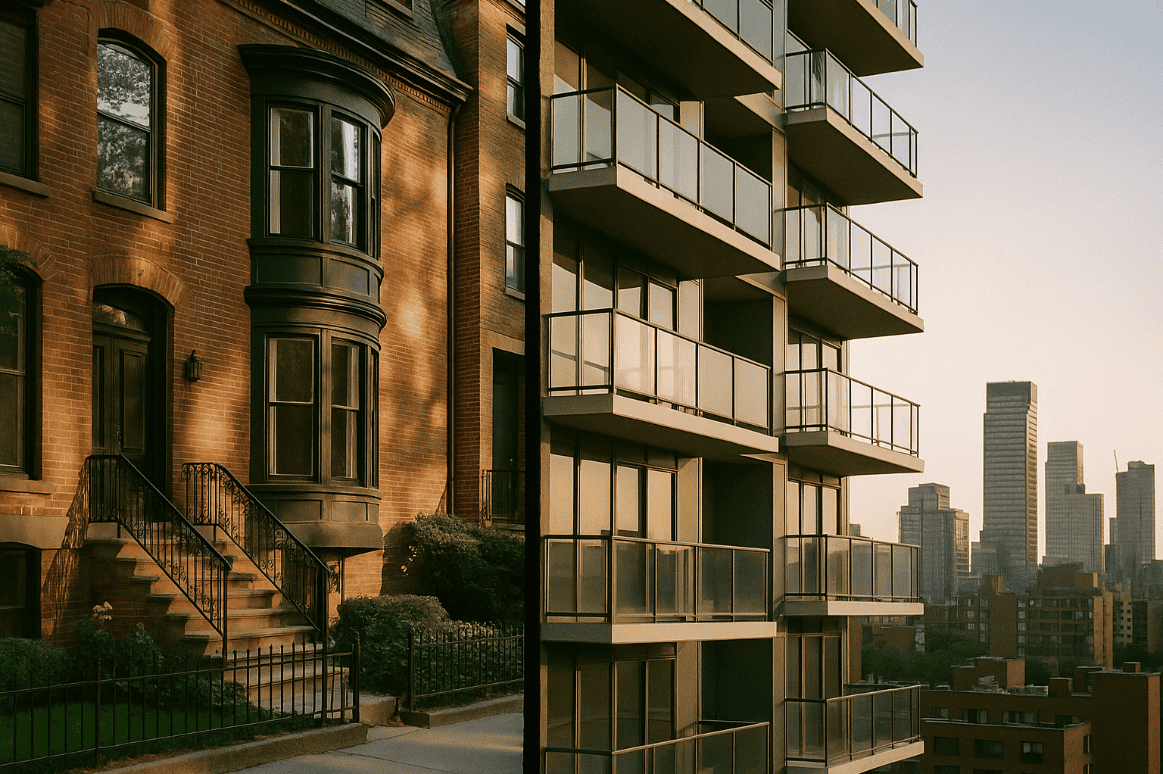
Condos and townhouses are popular options for people who want to own a home without the high maintenance costs of a single-family home, especially appealing if you seek lower maintenance responsibilities. But there are some important differences to keep in sight.
With a condo, you own the space inside your walls. Everything else: the roof, exterior, hallways, is shared and is maintained by the homeowners association or HOA, an organization that governs a common interest community (condos, high rises, townhouses).
With a townhouse, you own the whole unit, even the land underneath (this is usually referred to as “fee simple” ownership): that means more autonomy and also more upkeep. You’ll also pay a HOA fee, but it's a lot cheaper.
It’s important for you to know that most townhouses come with land ownership (called ‘fee simple’), but in some developments—especially urban ones—they may be legally structured like condos. It’s always smart to double-check the legal description in the title documents.
When it comes to condos, homeowners associations play a significant role, they handle the maintenance of exteriors, roofs, and shared amenities. Since they do so much, the fees in this case might be higher.
The California Department of Real Estate (DRE) notes that HOA fees can vary dramatically based on the level of services, and buyers should review governing documents to understand what’s covered and whether future special assessments are likely.
In the case of townhouse ownership, HOAs only manage shared spaces like community parks or shared driveways. However owners are responsible for their unit’s maintenance, so the rest is on you.
Condos often provide extensive perks: Pools, fitness centers, and lounges. Condos typically have more shared amenities than townhouses due to shared costs among residents. Fostering a more communal living experience can be a plus if you are into shared spaces.
Townhouses usually offer limited shared amenities, so the community feeling varies depending on the neighbors. Townhouses generally have fewer shared amenities and more private outdoor space compared to condos so you’re likely to get more personal space.

Now, when it comes to money, the cost of owning a condo versus a townhouse depends on several factors. Typically, you’ll find a higher listing price for a townhouse than a condo because of the space you’re getting, but several factors come into play, for example, a mortgage for a condo typically has a higher interest rate than one for a townhouse. Many factors come into play: purchase price, HOA fees, property taxes, insurance, and maintenance responsibilities.
Many first-time buyers are surprised to learn that condos, despite their lower sticker price, can end up costing more per month due to high HOA fees. One client we worked with in Los Angeles found a gorgeous $550K condo downtown—but the $850/month HOA pushed it beyond their comfort zone. In the end, a slightly higher-priced townhouse with lower monthly obligations was the smarter choice.
Here's a concise comparison to help you understand the financial implications of each option (cost data as of 2025):
| Cost Factor | Condo | Townhouse |
| Purchase Price | Median price around $355,491 | Median price around $380,602 |
| HOA Fees | High, $300-400/month on average (depending on your location, city-wise and community-wise). | Lower, $200-300/month on avg. |
| Property Taxes | Generally lower due to smaller unit size and shared land ownership. | Higher taxes apply both to the unit and the land underneath. |
| Insurance Costs | Lower, since coverage is mainly for the interior; HOA covers the exterior. | Higher, it includes both interior and exterior coverage. |
| Maintenance Responsibilities | Minimal, residents in condos typically pay for maintenance fees to cover shared spaces, unlike townhouse owners who take care of their home and surrounding area. | More extensive, owners are responsible for both interior and exterior upkeep. |
Condos generally have a lower purchase price compared to townhouses —as of recent data, the average sales price of a condo is $353,900. Townhouses, on the other hand, typically provide more living space and include ownership of the land, which can increase the purchase price.
Condo HOA fees are generally higher than those for a similar-quality townhouse in the same area, ranging from $300 to $700 per month, average HOA fees for condos can vary significantly depending on location, with some areas charging up to $3,500 a month for a three-bedroom condo. They often cover building maintenance, amenities (you’re not just paying for landscaping, you’re paying for the roof, the pool, the gym, maybe even water and trash), and some utilities. So condos have higher HOA fees than townhouses because their fees cover more services. Townhouse HOA fees are usually lower, averaging between $200 to $400 per month, and generally cover common areas and limited services. Expect to cover your roof repairs.
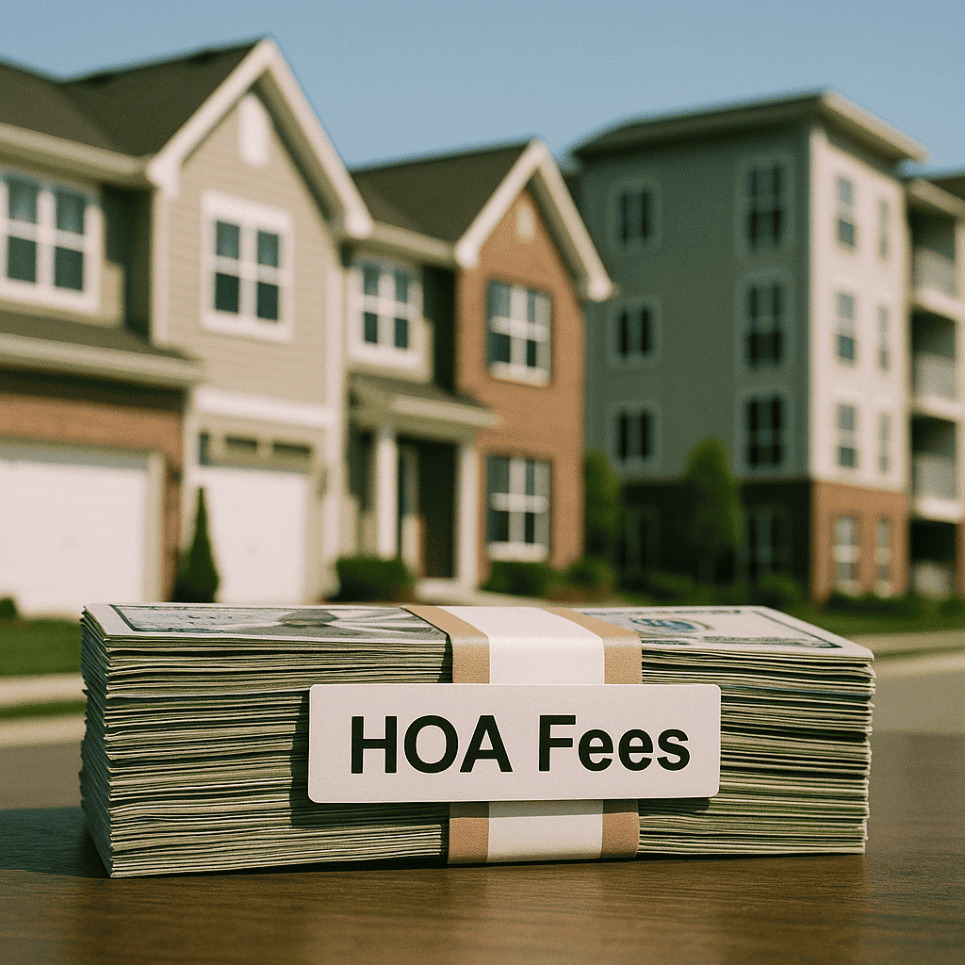
Condo owners insure the inside of the property, and the HOA handles the rest. Condo owners are required to have homeowners insurance that only covers the interior of their unit, while townhouse insurance can include the exterior. The HO-6 policies for condos are usually less expensive, averaging around $500 per year. Townhouse insurance tends to be higher, they’ll be covering the whole structure. That means higher premiums, but more control over what’s protected.
Property taxes are influenced by two key factors: the assessed value of your home and the local tax rate. Assessors typically evaluate based on square footage, number of rooms, property type, land ownership, and neighborhood conditions.
As highlighted by the National Association of Realtors (NAR), whether a property includes individual land ownership plays a significant role in its tax assessment. This is one reason why townhouses — which often include both the structure and the land beneath — are typically subject to higher property taxes.
Condo owners, by contrast, are usually taxed only on the value of their individual unit, not on shared spaces or the building structure. That’s because land and common areas in a condo are collectively owned and maintained by the HOA.
Mortgage interest rates for condos can be slightly higher compared to townhouses. This is due to several factors such as the financial health of the condo association and the proportion of owner-occupied units. Every “condo project” must go through scrutiny. Picky lenders will look at the entire project finances, the number of units owned by investors, and the stability of the HOA. If you want a government-backed loan, a Fannie Mae, a Freddie Mac, an FHA, or a VA mortgage, it might be even harder in the case of condos. And if you actually get a condo that meets the criteria you might have to put down a large down payment or pay more in fees (e.g. Fannie Mae might charge up to an extra 0.75% fee to the mortgage interest if you don’t put at least 25% down).
Some lenders will also apply Loan-Level Price Adjustments (LLPAs) for condos—especially those with limited reserves, high investor ownership, or pending litigation. This can translate into a noticeably higher interest rate or require a larger down payment — even for borrowers with excellent credit. It's why pre-approval with a lender experienced in condo financing is so critical.
Keep in mind: if you're looking at a non-warrantable condo—like one with ongoing litigation or too many investor-owned units—conventional financing might be off the table. But some jumbo lenders will still finance these, often at a premium rate or with stricter terms.
Townhouses, on the other hand, might be less tricky to get financed. They usually get treated more like single-family houses, which means better loan terms and fewer barriers, even with government-backed options, especially if the townhouse you’re after is part of a Planned Unit Development. But you must be careful before falling in love with a place because the property might be defined as a condo by some lenders.
Townhouses offer an interesting middle ground between a single-family home and a condo. Let’s break down their list of trade-offs.
Condos offer a unique blend of affordability and convenience. Here are their pros and cons.
Deciding between a condo and a townhouse isn’t just about square footage, there are key considerations that hinge on your lifestyle, maintenance preferences, and financial goals.

Don’t just look at listing prices, divide the price by the square footage. This metric tells you what you’re really paying for: in high-density areas, space is a premium, so it will reveal whether you’re paying for size, location, or amenities. This is a great yardstick to compare homes across different neighborhoods. If two properties are $700K but one is 300 sq. ft smaller, that matters.
Ask what the price really includes. Condos have a cheaper price upfront, but the HOA fees might increase your monthly budget. In case you lean towards this option, evaluate the price of each amenity and how you will benefit from it. You won’t like paying $600 for a pool you’ll never use. Townhouses have lower fees, but the maintenance costs will come from your personal finances, so looking carefully and thoroughly at the condition of the property is a must.
3. Map the Location Beyond the Commute
Look beyond the surface, and audit the neighborhood: check proximity not just to work or commute, but to schools, public transportation, grocery stores, hospitals, and hazard zones (wildfires, floods). A good listing does not necessarily mean a good location. Listings may not highlight flaws: local maps and hazard disclosures will.
HOAs can significantly affect your ownership experience. In California, they’re governed by the Davis-Stirling Act, which regulates their authority, finances, and resale rules. Some HOAs may:
Before you buy, ask to review:
These documents will reveal whether the HOA is financially sound or hiding risk. This is especially important if you're seeking FHA or VA financing, as certain restrictions can cause your loan to be declined.
You’re not just buying the house of your dreams, you’re buying any problem that comes with it. According to the California Association of Realtors (CAR), in California, sellers must provide detailed disclosures about the property’s condition, neighborhood issues, HOA lawsuits, and more. Ask for any inspection reports and the TDS (Transfer Disclosure Statement) early in your review process.
Condo financing can be trickier. Townhouses are treated like single-family homes, even if they share walls. If you’re going for a VA, FHA, or CalHFA loan, the condo must be approved by the program.
Lenders scrutinize the entire project when underwriting a condo loan. According to Fannie Mae’s Condo Project Standards, buildings with high investor ownership, litigation, or inadequate reserves may be labeled “non-warrantable,” limiting financing options. Jumbo and non-QM lenders may still offer financing—but often at higher rates or with stricter terms.
Condo loans can be trickier to underwrite, especially in buildings with high HOA fees, limited reserves, or investor concentration. Lenders will review the entire project—not just your unit. So get pre-approved by a lender experienced with condos early in your home search. Ask if the building is “warrantable” and if it qualifies for FHA, VA, or jumbo loans.
Financing a condo or townhouse also differs slightly, with condos sometimes requiring a more extensive approval process.
Tip: Check your financing options and pre-qualify if possible. If you’re looking at a condo, verify if it’s warrantable or non-warrantable, as this can impact the type of loan you’ll need.
So, finally, condo or townhouse? The answer, as you’ve probably guessed by now, isn’t black and white. Determining whether a condo or a townhouse is more cost-effective demands a multifaceted analysis:
If you're focused on lower entry costs, a condo is often the cheaper option. The purchase price tends to be lower, and the down payment is smaller. Insurance and property taxes are also lower. On the other hand, lenders deeply scrutinize the financial health of the entire condo association so this can result in higher interest rates or more stringent loan conditions.
You’re also off the hook for exterior maintenance, which can save time and unexpected expenses: but those savings come with a trick, HOA fees are typically higher and ongoing. If you’re not using the amenities, you’re still paying for them.
Condos appreciate at a lower rate, but can still provide an interesting ground for investment returns, particularly in urban locations with high demand for low-maintenance living.
Townhouses, while usually more expensive upfront, can be a very sensitive choice in the long run. Lower HOA fees and more autonomy —just remember: you’re trading convenience for responsibility. More freedom and privacy, yes, but also more responsibilities and repairs—.This can balance out the bigger mortgage depending on the taxes associated with the land value in the assessment (a great location might come with the perk of a higher price).
Since townhouses resemble single-family homes in structure, they’re typically easier to finance and may appreciate faster — especially because you own the land. They also offer more freedom to modify the property, which can boost resale value over time. Just be sure to weigh that freedom against the added maintenance responsibilities.
For personalized guidance and support in navigating the real estate market, reach out to Carlyle Financial today. Our experienced team is here to help you make informed investment decisions that suit your unique needs. Contact us to explore your financing options and find the perfect property for your investment journey!
California’s real estate market is consistently one of the hottest in the country, driven by a thriving economy, ample job opportunities, and, of course, the beautiful weather that makes the Golden State so desirable. However, this demand often leads to a competitive and expensive housing market. With limited housing inventory and high buyer demand, purchasing a home in California can feel challenging.

Jumbo mortgages can be complex, especially for first-time borrowers or those unfamiliar with high-value home loans. Jumbo mortgages, also known as non-conforming loans, are designed for properties that exceed the conforming loan limits set by the Federal Housing Finance Agency (FHFA).

Buying your first home is both exciting and a little overwhelming, especially when you’re unsure how long the mortgage process will take. Each step, from pre-approval to closing, can vary in timing, but having a clear understanding of each stage will help you prepare and make the process more manageable.
Secure financing through our exclusive network of local community banks and specialty lenders.